Basements and lower-level rooms
Lower levels can trap humidity and stay damp after seepage or a leak. We focus on drying, cleaning, and removing porous materials that held moisture.
Serving Wichita, Kansas & surrounding areas
If you have visible growth, a musty smell, or moisture that will not dry out, our certified technicians contain the area, remove contaminated materials safely, and document the work so you can move forward with confidence.
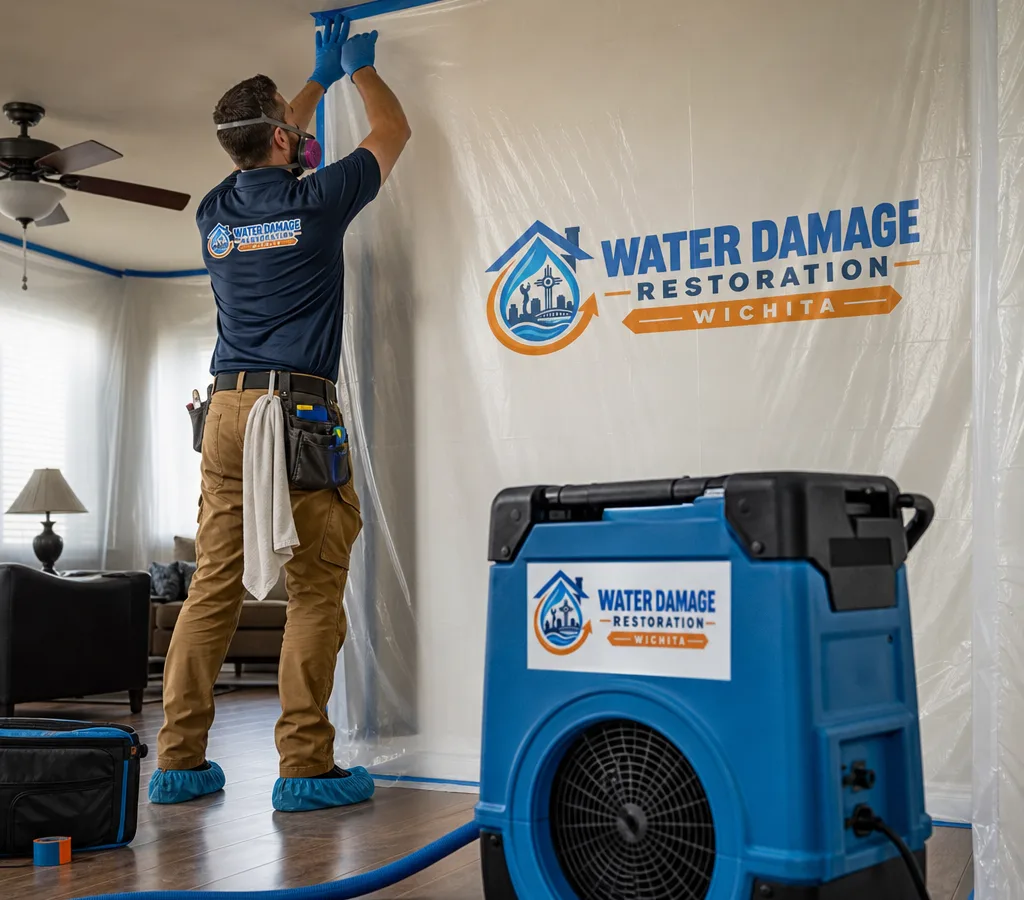
Mold remediation in Wichita, KS is not a wipe-down job. The correct approach is to stop the moisture source, keep spores from spreading, and remove or clean materials using methods that match the affected building materials.
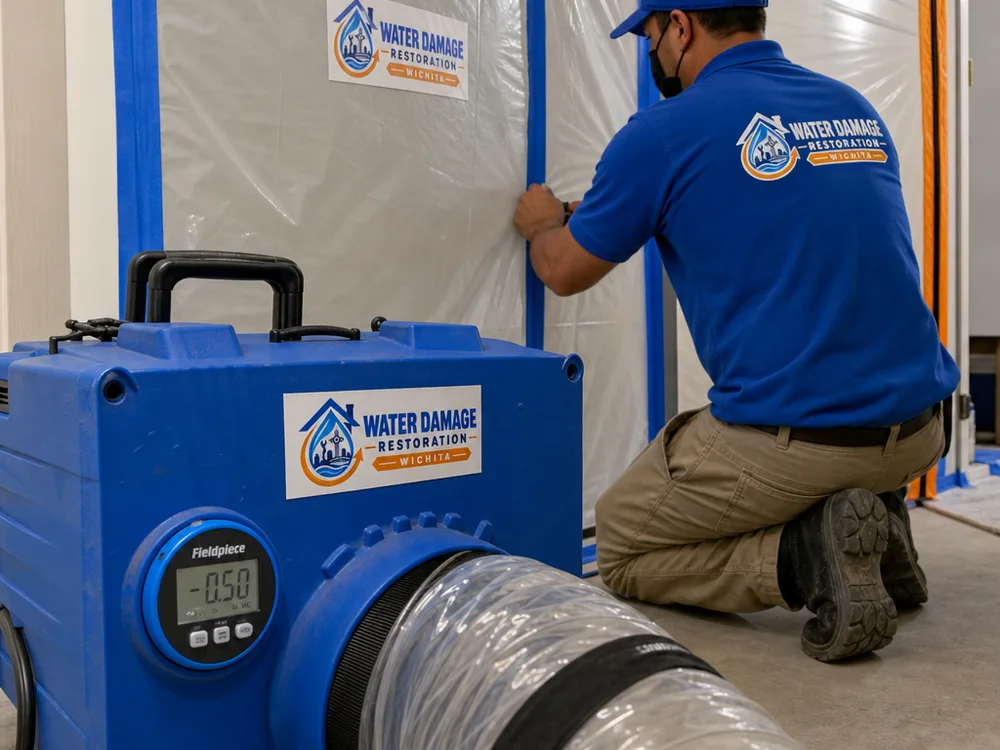
As Wichita’s trusted water damage restoration team, we handle residential and commercial mold remediation with practical containment and clear communication. That usually means isolating the work area with plastic barriers, running negative air when needed, and using HEPA filtration during removal and cleaning.
In Wichita, mold problems often show up after a plumbing leak, a roof issue, a wet crawl space, or a humid room that never fully dries. If you already dealt with the water but the odor or staining remains, the underlying moisture and contaminated materials may still be present.
When you reach out, we will ask where you are seeing growth, what materials are affected—drywall, framing, carpet, or insulation—and whether anyone has sensitivities so we can plan the safest path from day one.
If your situation started with active water intrusion, drying and moisture mapping are often the difference between a successful remediation and a repeat issue.
When you hire a Wichita mold remediation crew, you should expect a written scope and a plan that prioritizes containment. Mold spores are easily disturbed during demolition and cleaning, so controlling airflow and dust is part of the job.
Typical remediation tasks include:
You will also get practical guidance about what rooms to avoid, how long equipment will run, and when it is safe to reoccupy the work area.
Lower levels can trap humidity and stay damp after seepage or a leak. We focus on drying, cleaning, and removing porous materials that held moisture.
Recurring condensation and poor ventilation can feed growth behind vanities, around tubs, or near washers. We contain the space and address wet materials, not just surface stains.
Roof leaks and poor ventilation can affect decking and insulation. Remediation often requires selective removal so airflow and dryness are restored.
Crawl spaces can harbor mold on wood and insulation after long-term moisture. We remediate with controlled access, filtration, and practical steps to keep it from returning.
Moisture behind walls or under flooring can disrupt operations. We plan containment to protect adjacent tenant spaces and keep disruption predictable.
Containment comes before disturbance, followed by careful removal, cleaning, drying, and clear next-step guidance.
Call Now: (316) 364-7642We inspect the affected areas, check for moisture, and explain what is contaminated versus what can be cleaned. You get a written plan for containment, removal, and drying so you know what will change in the space.
Before disturbing materials, we isolate the work zone and set up HEPA filtration. If needed, we establish negative pressure so airborne particles stay inside the contained area.
Porous materials with mold growth—often drywall, insulation, carpet pad, and some ceiling tiles—are removed and bagged out carefully to limit cross-contamination.
We HEPA vacuum and clean remaining structural surfaces and use dehumidification as needed. Dryness is confirmed with moisture checks before any rebuild work is considered.
We review what was done, what to watch for, and how to reduce future moisture risk. If a separate rebuild is needed, you will have the information required to plan it.
Mold remediation in Wichita typically ranges from about $1,000 to $6,000 for most residential projects, with small contained areas sometimes costing less and large, multi-room or crawl-space jobs reaching $8,000 to $15,000+ depending on conditions. A single small bathroom wall section is priced very differently than widespread growth that requires demolition, negative air, and multiple days of drying.
Final cost depends on the size of the affected area, how many materials are contaminated, how hard the space is to access, how much containment is required, and whether moisture is still active. The exact price is confirmed after an on-site inspection and a written scope.
| Scope of work | Typical cost |
|---|---|
| Small contained area (single wall section) | Under $1,000 |
| Most residential projects | $1,000 – $6,000 |
| Large multi-room or crawl-space jobs | $8,000 – $15,000+ |
Ranges are typical for Wichita properties. The exact figure is confirmed after an on-site inspection.
“They explained what needed to be removed and why, set up containment that kept the rest of the house clean, and the musty smell was gone once the area was dried out.”
Alicia P.
“We had mold behind drywall after a slow leak. The crew showed up with the right equipment, kept the work area sealed, and walked us through the plan before starting.”
Marcus L.
Start times depend on the size and safety needs of the job, but we prioritize situations with active moisture, visible spread, or occupied living areas. After you reach out, we will ask a few targeted questions and schedule an inspection so we can set containment and equipment correctly before any demolition begins.
Remediation is usually based on what is contaminated and how far it has spread, not the species, so testing is not always required to do the job safely. If testing is needed for a specific reason, such as a clearance plan or third-party documentation, we can coordinate the right next step during the inspection.
Many projects allow you to stay in the home if the affected area can be fully contained and the work zone is separated from daily living spaces. If the growth is widespread, affects HVAC pathways, or involves sensitive occupants, we will recommend a safer temporary plan based on the layout and containment requirements.
Yes, if porous materials are contaminated, removal is often the most reliable option because mold can grow into the material, not just on the surface. We use containment, careful bag-out, and HEPA filtration so removal does not spread contamination into other rooms.
Bleach can lighten stains, but it is not a reliable standalone remediation method for building materials because the real issue is removing contamination and correcting moisture conditions. A professional approach uses containment, HEPA filtration, cleaning methods suited to the material, and drying verified with moisture checks.
Mold returns when moisture returns or when contaminated porous materials were left in place. Common causes include hidden leaks, incomplete drying in wall cavities, poor ventilation in humid rooms, or damp crawl spaces. A good remediation plan includes moisture source identification and dryness verification before the area is closed back up.
Tell us what you are seeing and where it is showing up. We will inspect the area, explain the containment and removal steps, and provide clear pricing based on the real conditions in your Wichita property.