Sampling plan based on the building
We choose sample locations based on moisture readings, HVAC returns, and where occupants notice odors or symptoms, not a one-size-fits-all checklist.
Serving Wichita, Kansas & surrounding areas
Get clear sampling, accredited lab analysis, and a written report you can use to decide what to do next after a leak, a flood, or that musty smell that will not go away.
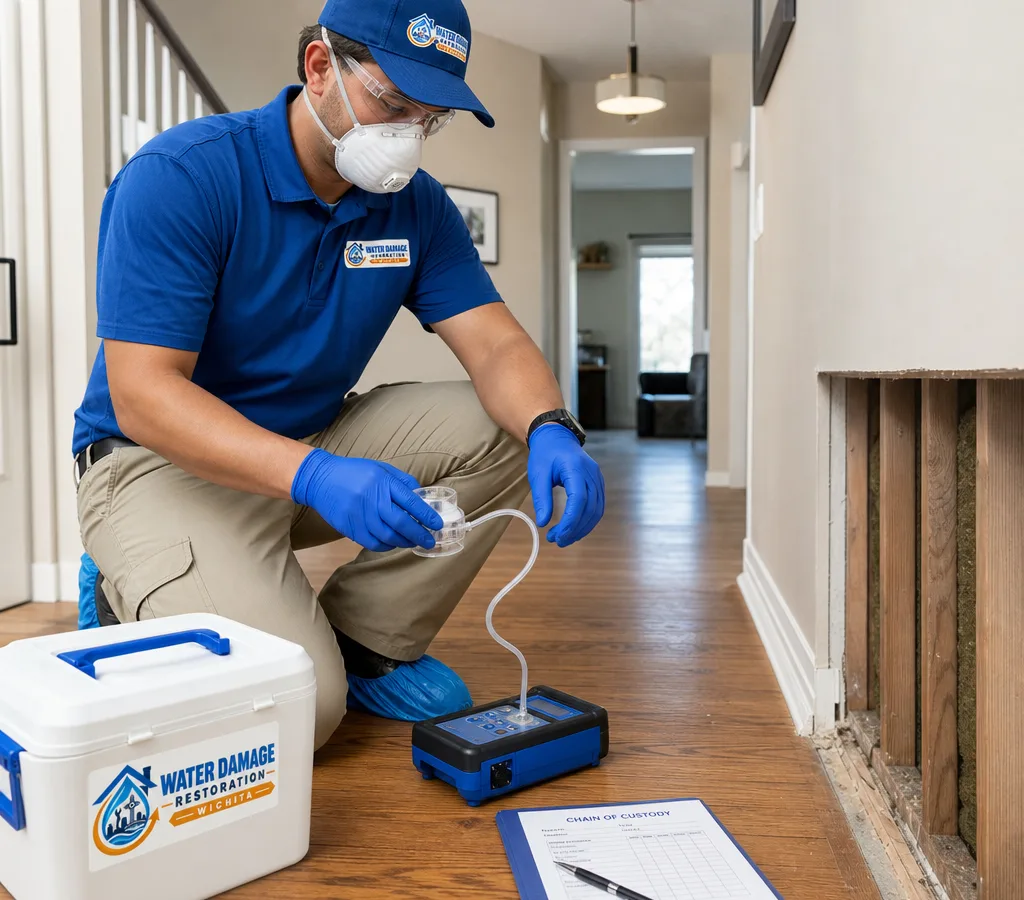
If you are searching for mold testing Wichita KS, you likely have a reason: water showed up where it should not, you smell mildew, or someone in the home is reacting when they are inside.
Mold testing makes the most sense when you need objective information, not guesses. Common situations include:
As water damage restoration specialists serving Wichita, we see that local homes take big temperature swings and humid summer stretches, which can push condensation into attics, crawlspaces, and behind furniture on exterior walls.
Testing helps separate surface staining from a broader indoor air problem and provides lab-backed results you can share with a landlord, seller, or insurance adjuster when needed.
If a large area of growth is visible or materials are actively wet, start by addressing the moisture source. Drying and moisture control may need to happen before sampling.
A good inspection ties lab results to building conditions. Our mold testing typically includes a walkthrough to identify likely moisture sources, targeted sampling, and a report that explains what the lab found and what it means for the space.
If you are deciding whether to clean a small area yourself, involve a professional, or pause renovation work, moisture mapping combined with lab analysis is usually the most practical path.
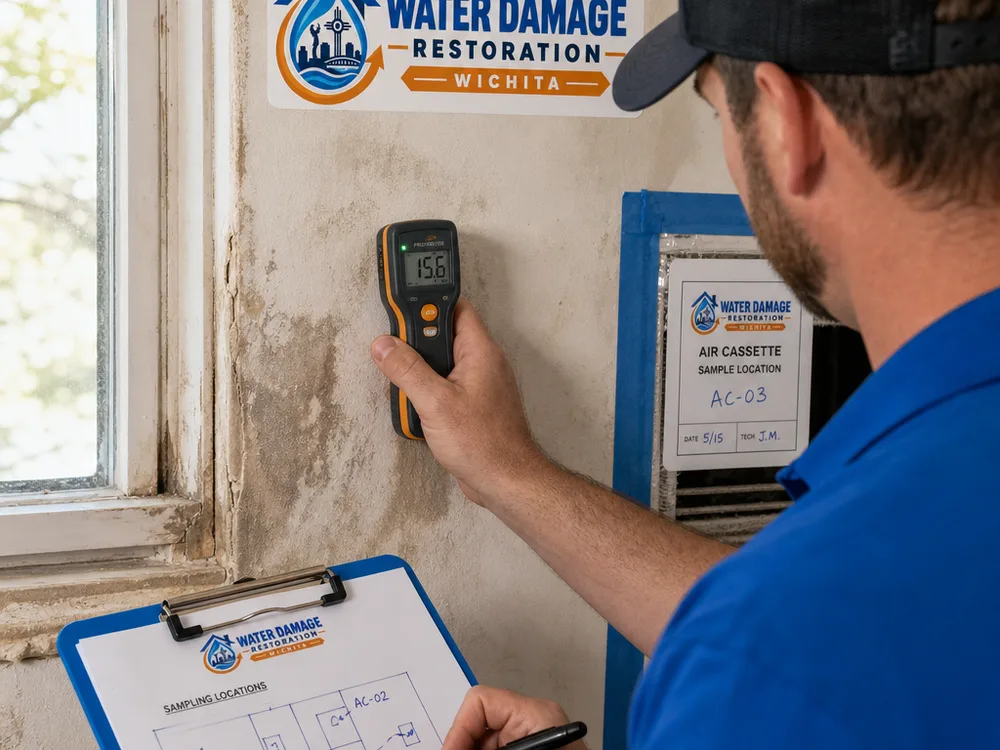
We choose sample locations based on moisture readings, HVAC returns, and where occupants notice odors or symptoms, not a one-size-fits-all checklist.
Each sample is labeled and tracked so your results are defensible for property records, a seller disclosure, or a claim conversation.
Samples go to a qualified microbiology lab for spore identification and counts using standard analytical methods for air and surface samples.
Your report summarizes what was sampled, the lab results, and the conditions we observed that could be feeding mold growth.
We explain what usually comes next: containment, cleaning versus removal, drying targets, and when verification testing is worthwhile.
We connect documented building conditions with carefully selected samples and qualified laboratory analysis.
Call Now: (316) 364-7642You tell us what happened—such as a leak, flood, odor, or visible growth—and which areas are most concerning so we can plan the right number of samples.
We walk the problem areas, check for active moisture, and review ventilation and building conditions that can drive condensation in bathrooms, basements, and attics.
We take an outdoor control sample when conditions allow, then collect indoor air or surface samples where they will be most informative, documenting every location.
Samples are submitted under chain-of-custody. Turnaround depends on laboratory workload, but results are typically available within a few business days.
You receive a report connecting the lab results with our on-site observations, plus clear recommendations for next steps and guidance on when to re-test after cleanup.
Mold testing in Wichita typically ranges from about $250 to $750, depending on the size of the home and the number and type of samples needed. A simple inspection with one or two air samples is usually on the lower end, while larger homes, multiple rooms, or combined air and surface sampling runs higher.
Final cost is driven by sample count, attic or crawlspace accessibility, whether an outdoor control sample is appropriate that day, and whether moisture mapping is needed to pinpoint hidden damp areas. Exact pricing is confirmed after the on-site inspection and sampling plan are set.
| Scope of work | Typical cost |
|---|---|
| Inspection with one or two air samples | $250 – $450 |
| Larger homes, multiple rooms, air + surface | $450 – $750 |
| Typical overall range | $250 – $750 |
Ranges are typical for Wichita properties. The exact figure is confirmed after an on-site inspection.
“We had a musty smell after a dishwasher leak. The inspection found elevated moisture behind the cabinets and the report explained the lab results in plain English. It helped us decide what had to be removed and what could be dried.”
“Buying an older home, I wanted objective testing. The sampling locations were explained up front, and the final report was detailed enough to share during negotiations.”
Scheduling is often available within 1 to 2 business days, and lab results commonly return within a few business days after sampling. Timing depends on access to the property, how many samples are collected, and lab workload, but we can walk you through realistic expectations when you book.
Yes, when weather and conditions allow, an outdoor control sample is a standard part of interpreting indoor air results. It provides a local baseline because outdoor spores change from day to day.
Leave the home in normal living conditions for the most useful snapshot of indoor air, and avoid unusual cleaning or heavy ventilation immediately before sampling. Tell us if portable air scrubbers or multiple purifiers have been running so we can document that condition and select appropriate sample locations.
Testing can suggest a hidden problem, but it cannot guarantee the exact cavity without opening it. Moisture mapping, visual inspection at likely intrusion points, and targeted sampling together provide the best chance of determining whether a concealed area is contributing to indoor air issues.
It can be, especially when you need documentation, want to confirm whether the problem is limited to one area, or suspect additional hidden growth after a leak. If there is a large visible area, the first priority is stopping moisture and planning proper containment and removal; testing is most helpful when it will change the scope or plan.
Keep the area dry, avoid disturbing suspect growth, and do not tear out materials without a plan for containment and debris handling. If there is active wetness, address it immediately because drying and humidity control are the fastest ways to limit further growth.
If you have a musty odor, recent leak, or suspicious staining, a documented mold inspection and lab report can give you a clear, defensible next step instead of trial-and-error cleanup.
Call Now: (316) 364-7642Tell us what you have noticed and where, and we will recommend the right sampling approach for your home and deliver a report that makes the results easy to act on.