Containment-first approach
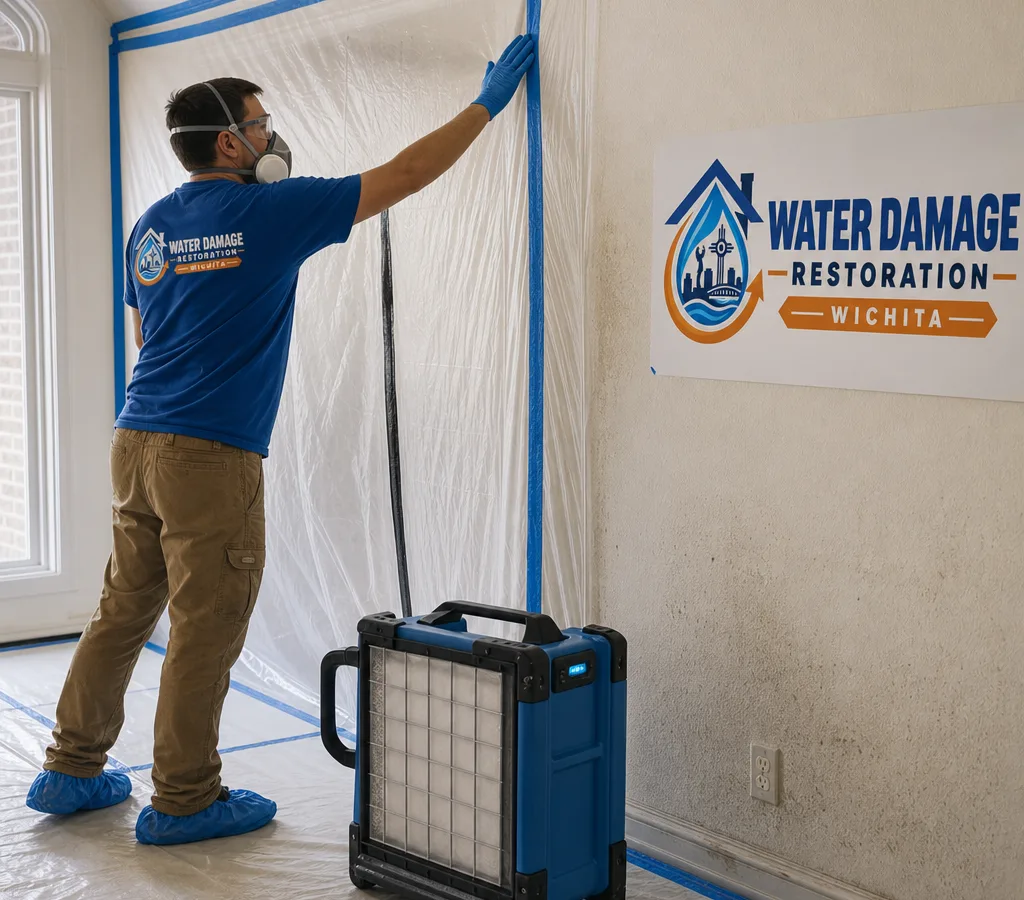
We isolate the work area with poly sheeting and controlled airflow so spores and dust do not migrate into clean rooms or HVAC pathways.
Serving Wichita, Kansas & surrounding areas
If you smell musty odors, see staining, or had a recent leak, get a clear inspection, a written scope, and containment-first cleanup to protect your home or business.
Searching for mold removal Wichita KS usually means something already feels off: a damp smell that will not go away, dark spotting around a supply vent, bubbling paint, or allergy-like irritation that gets worse indoors.
Mold cleanup is not a simple spray-and-wipe job. The goal is to stop spread, remove contaminated material safely, and correct the moisture condition that allowed growth in the first place.
As a local water damage restoration company in Wichita, KS, our mold removal work starts with practical answers: Where is the moisture coming from? How far did it travel? What needs to be removed versus cleaned?
Wichita properties can see humidity spikes and storm-driven water intrusion, and basements, crawl spaces, and attic areas are common places for hidden growth after small leaks or poor ventilation.
We keep the plan straightforward, document what we see, and explain the next steps in plain language.
If you are also dealing with active wet building materials, start with stopping the source and drying. Many mold situations trace back to unresolved moisture, so water damage restoration is often the first step before or alongside remediation when materials are still wet.
We isolate the work area with poly sheeting and controlled airflow so spores and dust do not migrate into clean rooms or HVAC pathways.
Air scrubbers and HEPA vacuums help capture fine particles, and our crew uses protective equipment suited to the scope of the job.
When porous materials are contaminated, removal is usually the safest option. We keep cuts clean, bag-out debris, and reduce disruption where possible.
Framing, masonry, and other non-porous or semi-porous materials may be cleaned and treated based on condition and access.
We point out the practical fixes that help prevent return growth, like improving ventilation, sealing air leaks, or correcting a leak source.
You receive a written scope and an explanation of what was done, what was removed, and what should happen next to keep the area dry.
Mold is a symptom of moisture, and the right work plan depends on where that moisture is coming from. In Riverside and other neighborhoods with older housing stock, we often see humid basements, aging plumbing lines, or past seepage that was never fully dried.
In College Hill and other areas with older plaster and lath, small roof or window leaks can stay hidden longer and feed growth behind walls.
Out west in newer builds, mold more often shows up around bathroom exhaust issues, tight building envelopes with poor airflow, or small supply line leaks.
Our approach is the same across the metro: inspect, contain, remove what cannot be cleaned, clean what can be saved, and confirm the area is dry. We also look at common problem zones like the underside of roof decking, around HVAC returns, behind vanities, and at the base of drywall where wicking can occur.
If the suspect area is near air registers or you notice musty odors when the system runs, mention it during scheduling. Mold issues can involve the air distribution system, and air duct cleaning may be appropriate when there is verified dust, debris, or contamination in the ductwork that affects indoor air quality.
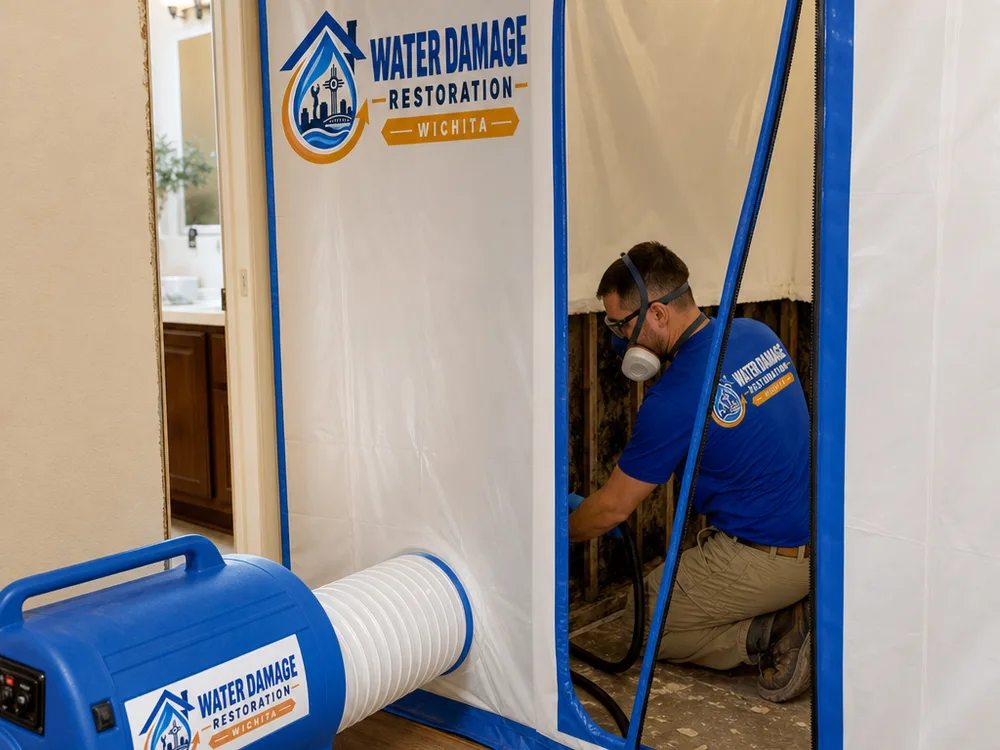
Each removal job follows an ordered plan: contain the work area, physically take out the affected materials, then clean and dry what stays.
Call Now: (316) 364-7642We evaluate visible growth and likely hidden pathways. We also look for the moisture driver, such as a plumbing leak, roof intrusion, condensation, or poor ventilation.
Before removal starts, we outline what areas are affected, what materials are likely to be removed, and how the space will be contained and protected.
We establish containment, set up negative air when appropriate, and run HEPA filtration to reduce airborne particulate during work.
Porous materials like drywall, insulation, and carpet pad are often removed when contaminated. Structural components may be cleaned with HEPA vacuuming and appropriate antimicrobial methods based on condition.
We confirm the area is dry and address what needs to change to keep it that way. If you plan to rebuild, we make sure the space is ready for repairs.
Mold removal in Wichita typically ranges from about $750 to $3,500 for smaller, contained areas, while larger multi-room or high-containment projects commonly run $4,000 to $10,000+. Price depends on how far the mold spread, what materials must be removed (drywall, insulation, flooring), access (crawl spaces and attics take longer), the containment level needed, and whether drying or repairs are required.
The most accurate number comes after an on-site inspection so the scope matches what is actually affected, not just what is visible.
| Scope of work | Typical cost |
|---|---|
| Smaller, contained areas | $750 – $3,500 |
| Multi-room or high-containment projects | $4,000 – $10,000+ |
Ranges are typical for Wichita properties. The exact figure is confirmed after an on-site inspection.
“They explained what had to come out and what could be cleaned, then built containment so the rest of the house stayed usable. The musty smell was gone after the cleanup and drying plan was finished.”
Alicia R.
“I appreciated the written scope and the photos. It made it easy to understand what was behind the wall and why painting over it would not have fixed anything.”
Mark T.
“The crew showed up prepared, kept the area sealed off, and left the work space tidy each day. The process was less disruptive than I expected.”
Jenna L.
Start time depends on scope and crew availability, but urgent situations are usually scheduled quickly because active moisture and disturbed materials can make conditions worse. When you reach out, share whether there was a recent leak, whether materials are still damp, and which rooms are affected so the right containment and equipment are planned from the start.
Drywall often needs removal when mold growth is on the back side, when the paper facing is affected, or when the base has wicked up water. If growth is only on a non-porous surface and the material is structurally sound, cleaning may be possible. The decision is made room-by-room based on what is contaminated and what can be accessed safely.
Many occupants can remain in the home when the affected area is properly contained, but it depends on the location, the size of the work zone, and sensitivities like asthma or immune concerns. We explain what areas to avoid, how airflow will be controlled, and whether temporary relocation is the safer choice for your situation.
Mold removal is the physical cleanup and material removal needed to eliminate contaminated building components and prevent spread, while testing focuses on sampling and lab analysis. Many projects can be scoped by inspection and moisture conditions, but testing can be useful when the source is unclear, symptoms persist without visible growth, or documentation is needed for a specific situation.
Yes, crawl spaces and attics are common areas for hidden growth because they can trap humidity, have limited airflow, or hide small roof and plumbing issues. Access and safety matter, so the scope typically includes controlled entry, appropriate containment, HEPA filtration, and a plan to address ventilation or moisture so the problem does not return.
Bleach is not a reliable remediation method for framing because it may not penetrate porous materials effectively and it does not address the moisture problem. Professional remediation relies on containment, removal of unsalvageable porous material, HEPA particulate control, and cleaning methods suited to the material and level of contamination.
If you think you have mold, the next best step is a professional inspection and a written scope so you know what must be removed, what can be cleaned, and what needs to change to keep the area dry.
Call Now: (316) 364-7642Tell us what you are seeing and where it is showing up. We will walk the area, identify the moisture driver, and lay out a safe remediation plan with straightforward next steps.